
What’s the difference between Condos co-ops and townhouses?
If you’re starting your home search, you’ve probably noticed that not all properties are the same. Along with single-family homes, you’ll often see listings for condos, townhouses, and co-ops. While they may look similar at first glance, there are important differences in how they’re owned, managed, and lived in. Understanding these distinctions can help you decide which option best fits your lifestyle, budget, and long-term goals.
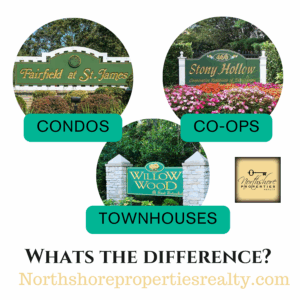
Condos (Condominiums)
A condo is a private unit within a larger building or community. When you buy a condo, you own the interior of your unit and share ownership of the common spaces (hallways, amenities, land) with other residents through a homeowners’ association (HOA)
-
Ownership: You own your individual unit (the interior walls in). The building’s common areas (roof, hallways, amenities) are owned jointly by all condo owners.
-
Financing: Similar to buying a house — you can get a traditional mortgage.
-
Fees: Monthly HOA (Homeowners Association) fees to cover maintenance, insurance, landscaping, amenities, etc.
Key Features:
-
Ownership of your individual unit.
-
HOA fees cover maintenance of shared spaces, landscaping, etc.
-
Often include amenities like gyms, pools, and lounges.
-
Generally More flexible for rentals compared to co-ops.
Townhouses
A townhouse is a multi-level home that typically shares one or two walls with neighboring units. Unlike a condo, you usually own both the interior and exterior of the home, plus the land it sits on.
Key Features
-
Ownership: You own the entire unit inside and out, (land as well) including the walls, roof, and often a small yard or patio.
-
Style: Multi-floor homes that are attached to others in a row or community.
-
Fees: May have lower HOA fees (if any) compared to condos, since you maintain more of the property yourself.
-
HOA may exist, but usually covers less than a condo (think landscaping or snow removal).
-
Financing is similar to buying a single-family home.
Co-ops (Cooperatives)
With a co-op, you don’t technically own real estate. Instead, you buy shares in a corporation that owns the entire building. In return, you’re granted the right to live in a specific unit.
Key Features:
-
Ownership is in shares, not the physical property.
-
Approval process is stricter — boards can require interviews, financial disclosures, and restrictions on renting.
-
Monthly fees are generally higher (called maintenance) cover building costs, taxes, and upkeep.
-
Often more affordable upfront, but financing can be more complicated.
-
Financing: Different than condos — some banks specialize in co-op loans.